

AI Can Design Your Logo. But Can It Build Your Brand?

Artificial intelligence can now create a logo in seconds. It can suggest a brand name, generate color palettes, recommend fonts, write taglines, create social media graphics and even design an entire website.
For businesses, particularly startups and SMEs, this has made professional-looking design faster and more accessible than ever before.

But it also raises an important question:
If AI can design your logo, can it also build your brand?
Not quite.
AI is transforming branding and graphic design, but there is an important difference between creating brand assets and building a brand.
A logo can be generated.
A brand has to be developed.
At TBC, we see AI as an increasingly valuable creative tool. But the foundation of successful branding still lies in strategy, differentiation, human judgment and understanding what a business genuinely represents.
What Is the Difference Between a Logo and a Brand?
A logo is a visual identifier.
A brand is the overall perception people develop about a company.
That perception is influenced by much more than a symbol or color palette. It includes your positioning, messaging, reputation, customer experience, visual identity, tone of voice, website, advertising, social media presence and every interaction someone has with your organization.
A beautifully designed logo cannot compensate for unclear positioning.
Likewise, a sophisticated website cannot automatically create trust if customers do not understand what the company stands for. This is why professional branding begins before the design process.
It begins with questions.
Who are you?
Who is your audience?
What problem do you solve?
What makes your business different?
Why should somebody choose you instead of a competitor?
What do you want your brand to represent five or ten years from now?
AI can offer possible answers.
Brand strategy determines which answers actually matter.
Can AI Create a Logo?
Yes.
Modern AI logo generators and generative design tools can create impressive visual concepts extremely quickly. Give an AI platform a prompt such as “create a sophisticated contemporary logo for a premium real estate developer” and it may produce dozens of directions.
It can explore symbols, typography, monograms, colors and different styles far faster than traditional manual concept development. This makes AI particularly useful during brainstorming and creative exploration. But generating options is not the same as making the right strategic decision. A logo needs to work within a wider business context.
It should reflect the company's positioning, appeal to the intended audience, remain practical across different applications and distinguish the organization from competitors.
The most visually impressive option is therefore not always the strongest branding solution.
AI Can Generate Designs. Branding Requires Decisions.
The real challenge in branding has never been simply producing something attractive. It is deciding what a business should communicate and how it should be perceived.
Imagine generating 100 logos using AI. Which one best reflects your company's future ambitions? Which one will resonate with customers? Which one works effectively in Arabic and English environments? Which identity will remain relevant rather than simply following today's design trends?
Which concept can expand successfully across signage, websites, advertising, packaging, uniforms, presentations and social media?
AI can accelerate exploration. But strategic judgment is needed to choose the right direction. That distinction becomes increasingly important as generative AI makes design production easier.
When Everyone Can Design, Differentiation Becomes More Important
AI has dramatically reduced the barrier to creating professional-looking content. That is a positive development. But it also creates a new challenge for brands.
When millions of businesses use similar platforms, prompts, templates and references, their creative output can start to look remarkably similar.
The same gradients appear.
The same minimalist layouts.
The same abstract graphics.
The same futuristic imagery.
And often the same language:
Innovative solutions.
Transforming the future.
Committed to excellence.
Your trusted partner.
Nothing is necessarily wrong with any individual element. The problem is that very little feels distinctive. As AI makes competent design increasingly accessible, simply looking professional will no longer be enough.
Brands must become recognizable. Memorable. Relevant. And unmistakably their own.
The key question therefore changes from:
“Does our brand look good?”
to:
“Could this brand identity belong to anyone else?”
AI Does Not Fully Understand the Story Behind Your Business
Some of the strongest brands are built around details that cannot be captured in a generic design prompt.
The founder's story.
The origin of the company name.
Years of accumulated reputation.
Local culture.
Customer relationships.
Business ambitions.
Market challenges.
Internal values.
Future plans.
These factors can influence everything from positioning and brand personality to typography, imagery and messaging.
For companies operating in Oman and across the GCC, branding can require another layer of understanding. Businesses frequently communicate with both local and international audiences. Brand systems may need to work effectively across Arabic and English. Cultural considerations, regional expectations and international ambitions often need to coexist within the same identity.
Understanding these nuances requires context.
AI can analyze information. Human creative direction interprets what that information means for the brand.
Professional Branding Is a System, Not a Logo
One of the biggest advantages of developing a professional brand identity is consistency. A strong brand should have a recognizable system that works across multiple touchpoints, including:
Logo and visual identity
Colour palette and typography
Brand messaging
Tone of voice
Corporate website
Social media
Advertising
Company profiles
Presentations
Packaging
Signage
Vehicle branding
Uniforms and merchandise
Digital campaigns
Each element should feel connected to the same organization. This consistency gradually builds recognition. Recognition creates familiarity. And familiarity can strengthen trust.
Without an established brand system, businesses often produce individual pieces of communication that look attractive in isolation but do little to build long-term brand equity.
AI may generate each asset. Brand strategy ensures all those assets tell the same story.
Can AI Replace a Branding Agency?
AI will undoubtedly change the role of branding agencies. But replacing repetitive production tasks is very different from replacing strategic creative thinking. A branding agency should not simply be hired because it knows how to operate design software.
Its value lies in understanding businesses, markets and audiences, identifying opportunities for differentiation and translating those insights into meaningful creative direction.
The strongest creative agencies will increasingly combine human expertise with artificial intelligence.
AI can help agencies research faster.
Explore more ideas.
Prototype concepts.
Analyze information.
Experiment with visual directions.
Accelerate content development.
And improve production efficiency.
But technology works best when guided by strategy. The future is therefore unlikely to be AI versus designers.
It will be creative professionals who understand how to use AI effectively while retaining the strategic thinking, taste, cultural understanding and human judgment that technology alone cannot provide.
Why Brand Strategy Matters More in the Age of AI
Ironically, the easier it becomes to create designs, the more valuable strategy becomes. When generating content is difficult, simply producing good material creates an advantage.
When generating content becomes easy, deciding what is worth creating becomes the advantage. The same applies to branding. Companies will have access to almost unlimited logos, images, copy and campaign concepts.
But unlimited content creates another problem:
What should your brand actually say?
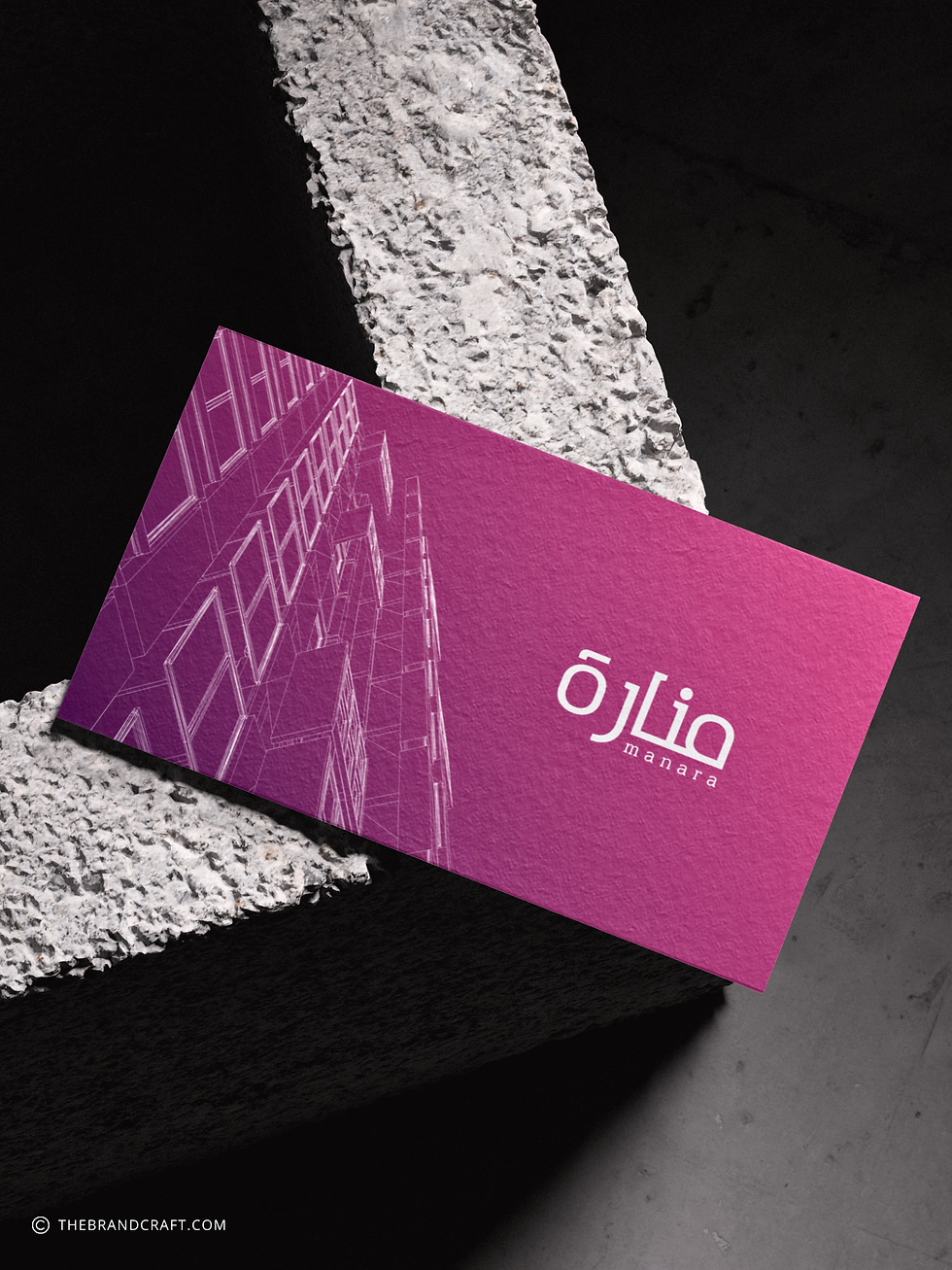
Successful businesses will need clear brand positioning to avoid becoming lost in an increasingly crowded environment. They will need a distinctive point of view.
A recognizable personality.
Consistent visual and verbal communication.
And a compelling reason for customers to remember them.
AI does not eliminate these requirements. It makes them more important.
What Makes a Strong Brand in an AI-Driven World?
A successful modern brand should combine technology with genuine human understanding. It should be:
Distinctive - immediately recognizable within its market.
Relevant - connected to the needs and expectations of its audience.
Consistent - recognizable across every communication channel.
Authentic - based on something genuine about the organization.
Adaptable - capable of evolving across digital and physical applications.
Strategic - aligned with the commercial direction of the business.
AI can contribute to each of these areas. But it needs direction.
Should Businesses Use AI for Branding?
Yes - but intelligently.
Businesses should not view AI as something to fear, nor should they assume it eliminates the need for professional creative expertise. The best opportunity lies somewhere in between. AI can dramatically improve efficiency and expand creative possibilities.
A branding agency can provide the research, strategic direction, judgment and creative consistency needed to turn those possibilities into a coherent identity.
Technology provides more tools. Strategy determines how those tools should be used.
AI Can Create Your Logo. Your Brand Needs More.
Businesses now have access to creative capabilities that would have seemed extraordinary only a few years ago.
A logo can be generated almost instantly.
A website can be assembled rapidly.
Hundreds of advertising concepts can be created in minutes.
But building a successful brand still requires something deeper. It requires understanding what a business stands for.
Knowing why customers should care. Identifying what makes it different.
Developing a recognizable identity. And communicating that identity consistently over time.
So yes, AI can design your logo.
It can suggest your colors. It can generate your images. It can write your tagline. It can even help build your website. But the real challenge in branding has never simply been creating more.
It is knowing what should be created, why it matters and how it builds value for the business. That is where brand strategy makes the difference.
At TBC, we combine strategic thinking, creative expertise and evolving technology to build brands that are not simply designed to look good - but designed to mean something. Frequently Asked Questions
Can AI create a professional logo?
Yes. AI logo generators can quickly produce visually professional logo concepts. However, businesses should consider whether the design is distinctive, strategically relevant, practical across different applications and appropriate for their intended market before adopting it as a long-term identity.
Can AI build a complete brand identity?
AI can help generate many elements of a brand identity, including logos, color palettes, typography suggestions, imagery and messaging. A complete brand identity, however, requires strategic decisions about positioning, audience, differentiation, personality and consistency.
Will AI replace branding agencies?
AI is more likely to change branding agencies than eliminate them. Agencies can use AI to accelerate research, ideation and production, while focusing more heavily on brand strategy, creative direction, cultural understanding and business-oriented decision-making.
Why is brand strategy important?
Brand strategy defines how a company wants to be positioned and perceived. It helps determine the audience, differentiation, messaging, personality and direction of the brand before visual and communication assets are developed.
What should businesses look for when choosing a branding agency?
Businesses should look beyond visual design portfolios and consider an agency's ability to understand business objectives, positioning, audience, market context, messaging and long-term brand consistency.



Comments